
Flake floors for garages, carports and lanais
Chip Floor Coatings in St. Petersburg, FL
A speckled, textured finish that hides beach sand and grit between sweeps and gives wet feet something to grip.
- Free on-site estimates
- Moisture test on every slab before we coat
- Prep, coats and price itemized on a written quote
Why So Many Local Garages Go With Flake
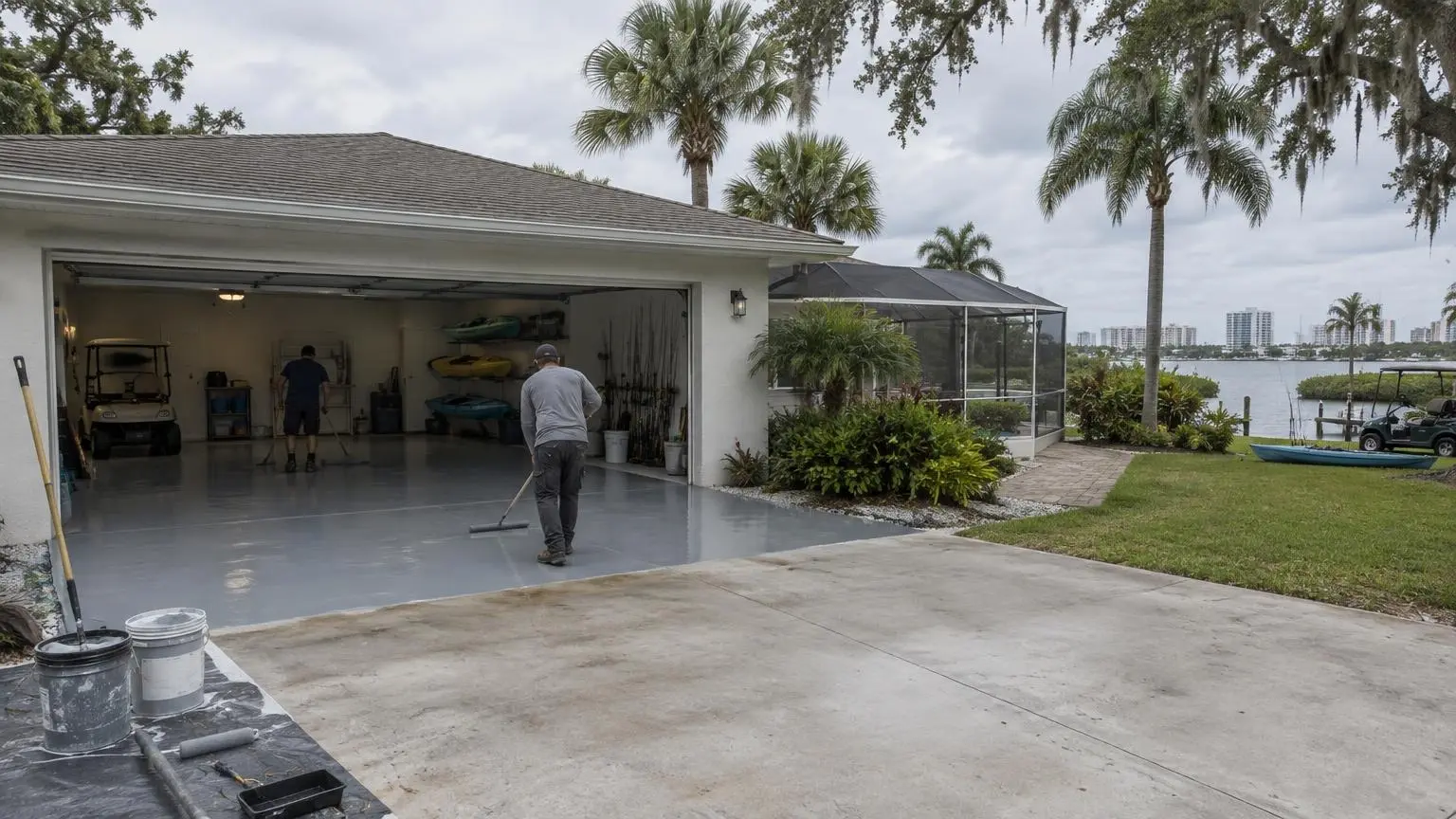
Chip floor coatings are the most requested finish we install in St. Petersburg, and the reason is practical. A floor covered in vinyl chips hides the things that make a solid color look dirty a day after cleaning: sand tracked in from the beach, pollen blowing through an open door, tire marks and small scuffs. It also has a little texture, which matters in a city that averages 52.48 inches of rain a year. A flake epoxy floor is still a full resin system underneath. The chips are the visible layer between a bonded base coat and a clear topcoat, and they add character without changing how the floor is built.
What the chips actually are
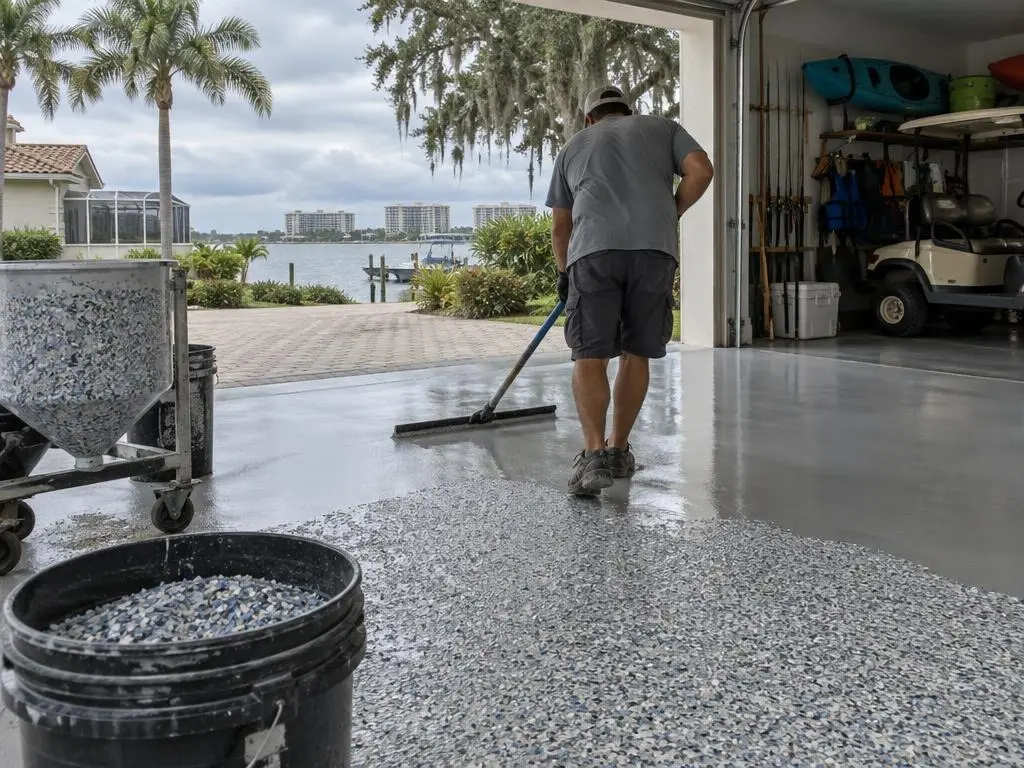
The flakes, also called chips or vinyl flake, are small, thin pieces of colored acrylic or vinyl. They come in blends of three to six colors and in several sizes, from fine flecks to pieces about the size of a fingernail. We toss them by hand into the epoxy base coat before it sets. The base locks the flakes in place as it cures. Then we scrape off the loose and standing chips, vacuum, and seal the whole floor with a clear topcoat that fills around the flakes and evens out the surface. By HomeAdvisor's figure the flakes run only about $0.04 per square foot. Your money mostly buys the prep, the resin and the labor that make the floor last.
Full broadcast versus a light scatter
You will see two styles:
- Full broadcast. Flake is thrown until the base cannot take any more, so no base color shows. This gives the most texture, the strongest hiding power and a thicker overall system.
- Partial broadcast. A lighter scatter, with the solid base color left visible between chips for a sleeker, more modern look.
For garages, we recommend full broadcast in most cases. It hides more, tolerates more abuse and does a better job disguising old patches and slab flaws that grinding cannot erase completely. Partial broadcast suits a lightly used space, such as a home gym or a finished storage room, where looks matter more than grit.
Picking a blend that works in this light
Colors look different at the back of a dim garage than they do in a bright doorway with the sun behind you. Mid-tone grays, tans and mixed blends tend to hide sand and dust well. Very dark blends show light-colored dust and get hotter on a sunny threshold, while very light ones can show tire marks. Physical samples come along to the visit; we set them on your floor, in the doorway and in the shade, so you can judge them in the light they will live in. If the garage opens to the west, take a look at the samples in the late afternoon if you can.
A clear topcoat that will not turn amber
The clear layer over the chips does most of the work you notice day to day. It takes the scuffs, the chemicals and the UV. HomeGuide gives polyaspartic an excellent mark for UV and epoxy only poor to fair, so our standard topcoat over flake is polyaspartic. Plain clear epoxy over a gray blend can yellow over time in a garage with the door up. We can also tune the texture by how much we let the topcoat build around the chips. A thinner top leaves more grit, which is what you want on a floor that gets wet often. A thicker top feels smoother and wipes cleaner.
Carports, patios and screened rooms
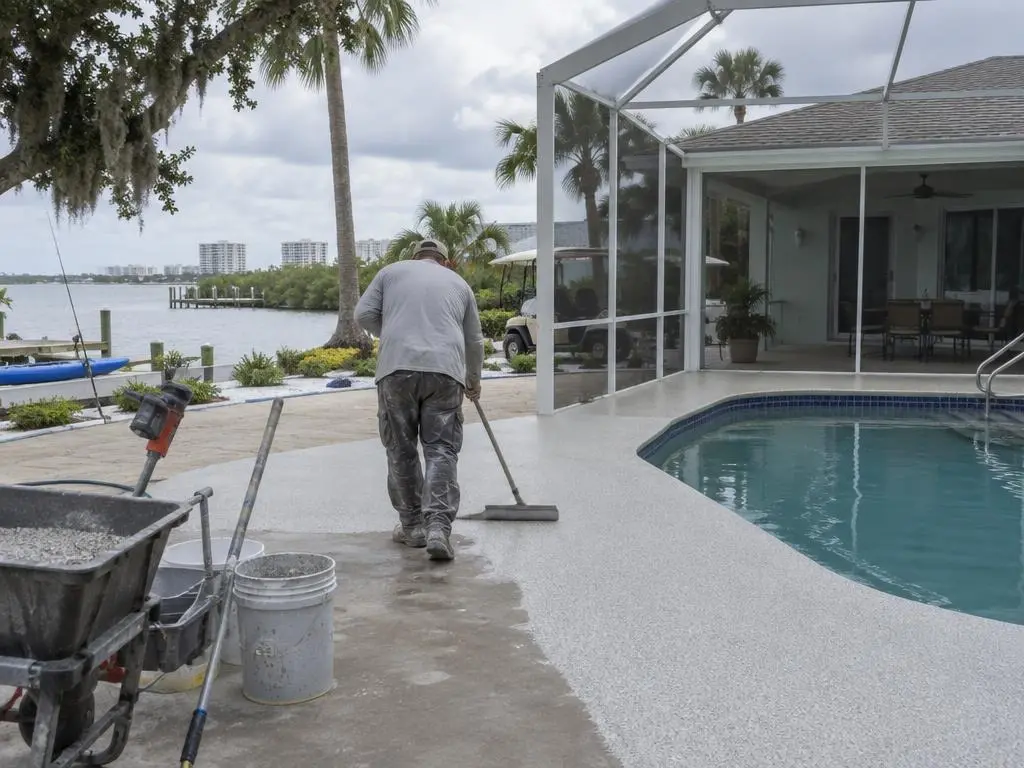
Flake is not only for garages. Some homes have a carport, a small patio or a screened porch instead of a full garage, and those slabs see rain blowing in, bare feet and wet towels. Point2Homes ACS figures show that about 26% of homes in Largo and about 15% in Pinellas Park are manufactured homes, and many of those have a carport or patio slab that has never been sealed. A flake system suits those spaces well. It goes down fast, often in a day on a small slab, hides minor flaws in thin concrete and gives a secure feel underfoot. If you are in a park or community with rules about exterior work, check them first, and we will plan around them.
Where flake is the wrong choice
Flake is a great all-rounder, but not every room needs it. Inside a home, where you want a smooth, glossy look, a metallic or solid epoxy may suit better. In a commercial kitchen, a quartz-broadcast or other thicker system handles hot water and heavy cleaning better than standard vinyl chips. On a pool deck that bakes in full sun, a lighter cool-deck texture or overlay may be more comfortable on bare feet. We will tell you which finish we think fits during the estimate and why.
Chip Floor Options We Offer
Choose the coverage, the chip size and the finish texture. We will show you samples of each.
Full flake broadcast
Chips thrown to refusal for maximum texture and hiding.
Partial flake scatter
A light scatter of chips with the solid base color showing through.
Chip size and blend
Fine to large flakes in multi-color blends, chosen with samples on your floor.
Clear polyaspartic topcoat
A UV-stable seal over the chips that resists yellowing and scuffs.
Texture tuning
More grit for wet areas, a smoother feel for rooms that are mopped.
Carport and patio flake
Small exterior slabs coated with outdoor-rated layers.
Published Costs for Flake Floors
| Item | Published range | Source |
|---|---|---|
| Epoxy garage floor coating, per sq ft | $4 to $10 | HomeGuide |
| Polyaspartic garage floor coating, per sq ft | $5 to $12 | HomeGuide |
| Polyurea garage floor coating, per sq ft | $5 to $10 | HomeGuide |
| Two-car garage, epoxy | $1,600 to $5,800 | HomeGuide |
| Vinyl flakes, material only | About $0.04 per sq ft | HomeAdvisor |
| High-grade coating upgrade | Adds 20% to 30% | This Old House |
National guide figures only. Coverage, chip size, the topcoat and the state of your slab set the real figure. Once we have seen the floor, the amount written on your quote is what we charge.
Laying a Chip Floor, Start to Finish
1. Samples and testing
We test the slab for moisture and lay out chip samples where you can see them in real light.
2. Surface prep
The floor is ground and cracks and pits are filled so the base can bond.
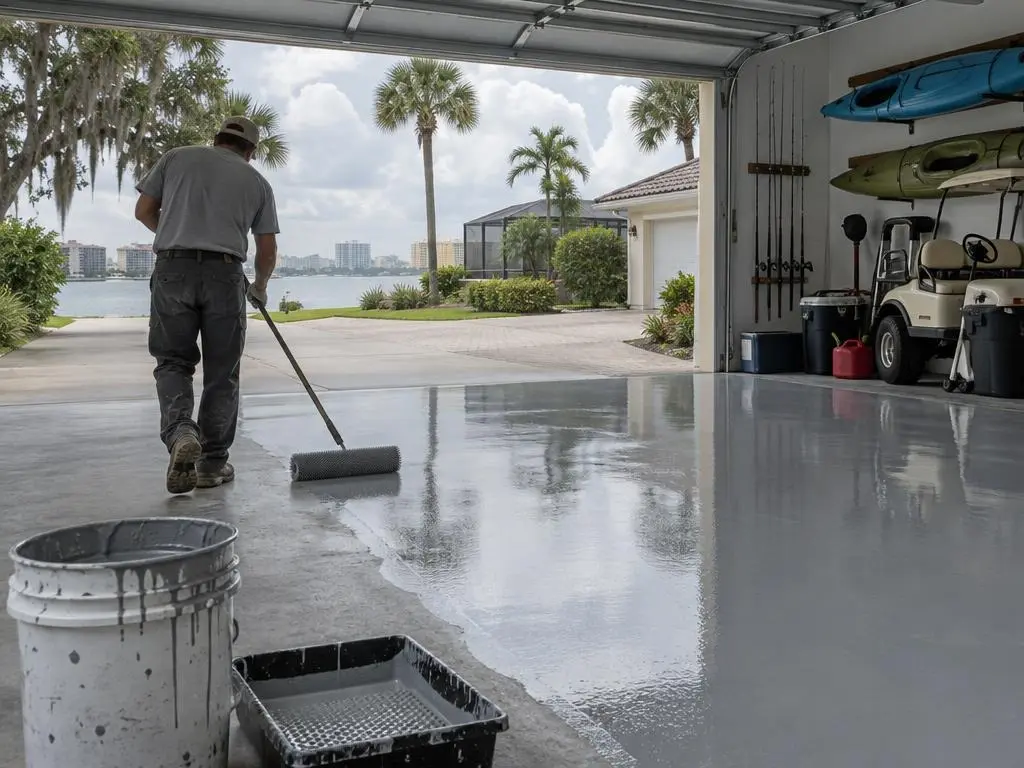
3. Base coat and broadcast
We roll out the epoxy base and throw chips into it before it sets.
4. Scrape and vacuum
Once the base cures, we scrape loose chips and vacuum the floor clean.
5. Clear topcoat
A polyaspartic topcoat locks the chips down and decides how textured the finished surface feels.
Why Choose Us for Chip Floor Coatings
Samples on your own floor
We judge chip blends in your doorway and shade, not under shop lights.
Texture set on purpose
We decide topcoat build with you, so the floor has the grip or smoothness you want.
Straight advice on fit
If a different finish suits the room better, we say so.
Chip Floor Coatings Questions
Is a flake epoxy floor the same as a chip floor?
Yes. Whether you call it flake, chip or vinyl flake, it is the same finish: colored chips broadcast into an epoxy or polyaspartic base, then locked under a clear topcoat.
Does flake make the floor less slippery?
It adds texture, especially with a full broadcast and a thinner topcoat. Where floors are often wet, a gritted topcoat gives shoes more bite.
Which flake colors hide sand and dirt?
Mid-tone blends of grays and tans usually hide sand and dust well. Lay a few sample chips on your slab in the doorway and in shade before you choose.
Can you coat a carport or patio with flake?
Yes, with an outdoor-rated topcoat. Small carport and patio slabs often take a single day of work, and we check any community rules first.
Chip Floor Coatings Service Areas
- Epoxy Flooring in St. Petersburg, FL
- Epoxy Flooring in Gulfport, FL
- Epoxy Flooring in Pinellas Park, FL
- Epoxy Flooring in Seminole, FL
- Epoxy Flooring in Largo, FL
- Epoxy Flooring in Clearwater, FL
- Epoxy Flooring in Dunedin, FL
- Epoxy Flooring in Safety Harbor, FL
- Epoxy Flooring in Oldsmar, FL
- Epoxy Flooring in Palm Harbor, FL
- Epoxy Flooring in Tarpon Springs, FL
- Epoxy Flooring in Treasure Island, FL
- Epoxy Flooring in St. Pete Beach, FL
- Epoxy Flooring in Madeira Beach, FL
- Epoxy Flooring in Indian Rocks Beach, FL
- Epoxy Flooring in Belleair, FL
- Epoxy Flooring in Kenneth City, FL
- Epoxy Flooring in South Pasadena, FL
- Epoxy Flooring in Redington Shores, FL
- Epoxy Flooring in Lealman, FL
- Epoxy Flooring in Feather Sound, FL
- Epoxy Flooring in East Lake, FL
- Epoxy Flooring in Bay Pines, FL
- Epoxy Flooring in Tierra Verde, FL
Get a Chip Floor Coatings Estimate
Book a free on-site estimate and see chip samples on your own St. Petersburg slab.