
Kitchens, shops, warehouses and clinics
Commercial & Restaurant Floors in St. Petersburg, FL
Seamless coatings that take hot water, cleaning chemicals and constant traffic, scheduled so your doors stay open.
- Free on-site estimates
- Moisture test on every slab before we coat
- Prep, coats and price itemized on a written quote
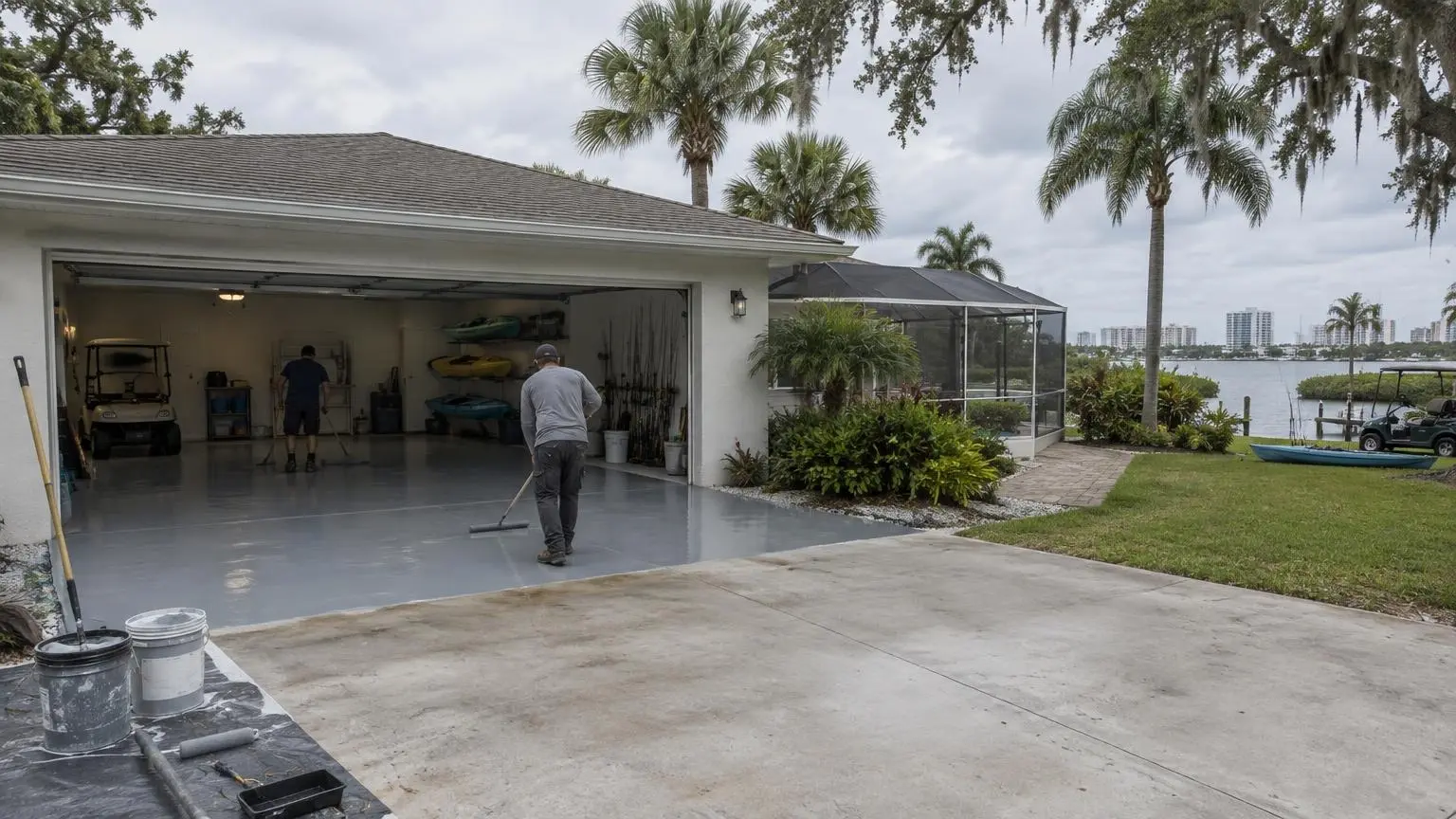
Floors That Work as Hard as Your Staff
Commercial and restaurant floors in St. Petersburg take a beating that no garage sees. A kitchen floor gets hot water, grease and degreaser every night. An auto bay gets dropped tools, fluids and jack stands. A warehouse sees pallet jacks and forklifts. Commercial epoxy flooring and other resin systems turn worn, porous concrete into a seamless surface that cleans quickly, resists chemicals and does not trap dirt in grout lines. We plan each commercial floor around what spills on it, what rolls over it, how it is cleaned and how long you can afford to close.
Who we coat for
Wikipedia lists hospitals, Raymond James and Jabil among St. Petersburg's largest private employers, and a long list of smaller businesses supports them and the visitors who come for the waterfront and downtown. North of the city, Wikipedia notes that Lockheed Martin Aeronautics does metal forming, fabrication and assembly in Pinellas Park, and that marine businesses are common across the area. That mix gives us a wide range of concrete:
- Restaurant kitchens, prep rooms, walk-in cooler floors and dish areas
- Breweries, taprooms and food production spaces
- Auto repair bays, detailing shops and marine service shops
- Warehouses, fabrication shops and storage units
- Clinics, labs, salons, offices and retail floors
Matching the system to the abuse
One coating does not fit every business. For light retail or offices, a solid epoxy with a urethane or polyaspartic top may be enough. For an auto or marine shop, we build a thicker, 100% solids epoxy system that stands up to fluids and impacts. Restaurant kitchens are their own case. Hot water, steam cleaning, fats and frequent temperature swings call for systems built for thermal shock, such as urethane cement, or a quartz-broadcast epoxy with a chemical-resistant top. In HomeAdvisor's guide, 100% solids work for commercial and industrial floors begins at $12 per square foot, and the price climbs as thickness and material increase. We explain the tradeoffs and recommend a build in writing.
Grip, drainage and cove base
A floor in a working kitchen is wet much of the day. We broadcast quartz or aggregate into the system for slip resistance, and we can vary the texture: coarser on the cook line and around the dish pit, finer in dining areas where looks matter more. Where floors drain, we slope repairs toward the drains so water does not sit. An integral cove base, where the coating runs up the wall a few inches in one seamless piece, keeps water and grime out of the corner where wall meets floor. Ask your health inspector what they expect for your space. We can give you product data sheets to share.
Working around your hours
Closing costs money. According to Bob Vila, a fast-curing polyaspartic system can hold a business closure to a day or two, while epoxy takes longer to return to service. We plan around your slow days. That can mean coating in sections, working overnight, splitting the kitchen from the dining room, or using fast-cure products on the busiest areas. We also plan for odor and ventilation, since some resins smell strongly while they cure, and we coordinate equipment moves with your staff.
Concrete floor coating for older buildings
Older commercial slabs tend to show their age. We often find spalled joints, past patch jobs, oil soaked deep into the concrete and old coatings peeling in sheets. Each needs fixing before a new system goes down. We grind, repair joints with flexible or rigid fillers as the joint requires, and test the slab for moisture. After the 2024 storms, when the National Hurricane Center measured a 6.31-foot storm tide on the St. Petersburg gauge, some ground-floor businesses near the water also have slabs that took on salt water. Those need testing and sometimes rinsing before any resin will bond well.
Industrial and storage floors
For fabrication shops, warehouses and storage spaces, the priorities are impact, abrasion and easy cleanup. We use thicker epoxy builds, line striping for walkways and work zones, and topcoats chosen for the chemicals on site. Weather matters even indoors, since roll-up doors let in humid air and summer storms. Each coat waits on a fresh reading of temperature, humidity and dew point, and we close the space off when possible. Every step, product and cure time goes into your written quote, so you can plan the shutdown with confidence.
Keeping a commercial floor in service
A resin floor lasts longest when the cleaning routine suits it. We will go over which cleaners and pad colors are safe, how often to scrub, and what to keep off the floor, such as unprotected steel casters or dragged equipment. High-traffic lanes and the area in front of a fryer or dish machine wear first, so we can plan for recoating those zones on their own later without closing the whole space. Topcoats can usually be refreshed after light sanding as long as the base is still bonded. Building that into your maintenance schedule costs far less than a full tear-out later.
Commercial Systems and Add-Ons
We combine these to suit the traffic, the chemicals and the schedule in your space.
100% solids epoxy
Thick, high-build floors for shops, warehouses and storage.
Quartz-broadcast systems
Colored quartz in epoxy for kitchens and wet areas that need grip.
Urethane cement
A heavy-duty option for kitchens with hot water and temperature swings.
Polyaspartic fast-return floors
Fast-cure systems for businesses that can only shut down a day or two.
Integral cove base
Coating carried up the wall in one piece for easy washing.
Joint and spall repair
Damaged joints and edges rebuilt before coating.
Line striping
Walkways, work zones and safety lines coated into the system.
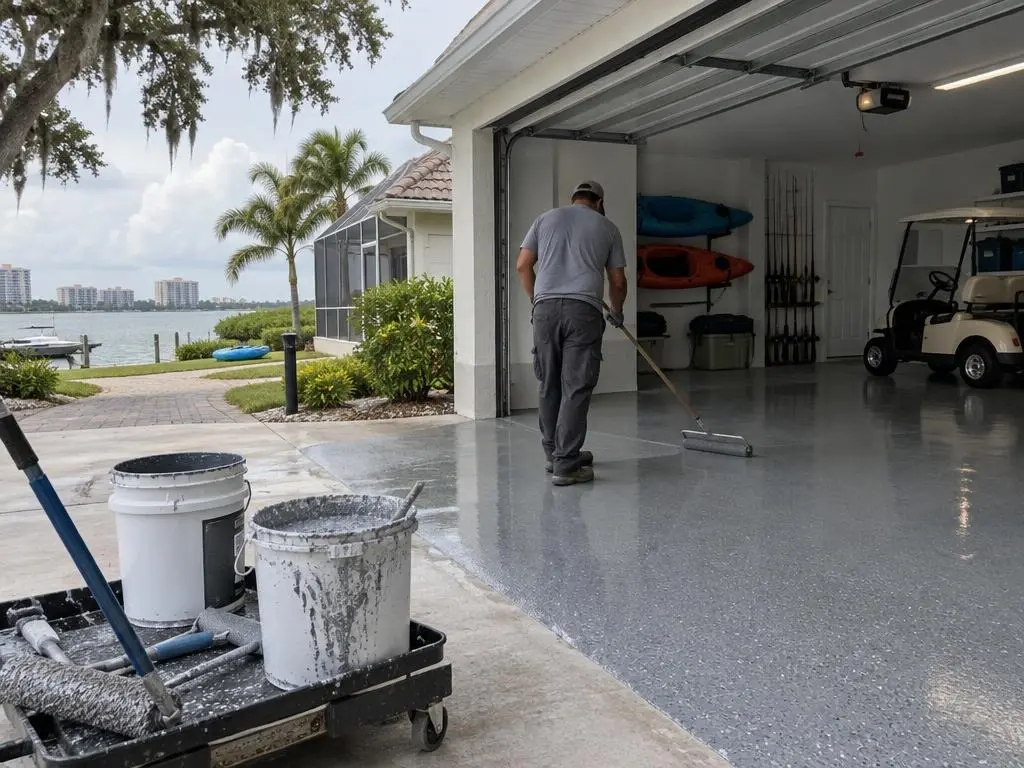
Commercial Floor Coating Costs
| Item | Published range | Source |
|---|---|---|
| 100% solids (commercial, industrial), per sq ft | $12 and up | HomeAdvisor |
| Professional epoxy, per sq ft | $3 to $12 | This Old House |
| 500 sq ft, polyaspartic | $2,500 to $6,000 | HomeGuide |
| 600 sq ft, polyaspartic | $3,000 to $7,200 | HomeGuide |
| Typical contractor job minimum | $500 to $1,000 | HomeAdvisor |
| Patching cracks and damage | $25 to $250 | HomeAdvisor |
Guide figures are national and mostly residential. Commercial pricing depends on the system, slab repairs, after-hours work and phasing, so we quote each space after a site visit. The written estimate is your price.
How a Commercial Job Runs
1. Site walk
We look at the slab, the chemicals in use, the cleaning routine and your schedule.
2. Moisture and slab testing
Readings and a check of joints, spalls and old coatings.
3. Written scope and phasing plan
System, prep, sections, work hours and total in writing.
4. Prep and repair
Grinding, joint repair and any coating removal, with dust control.
5. Install and cure
Coats applied in planned sections, then we confirm when each area can reopen.
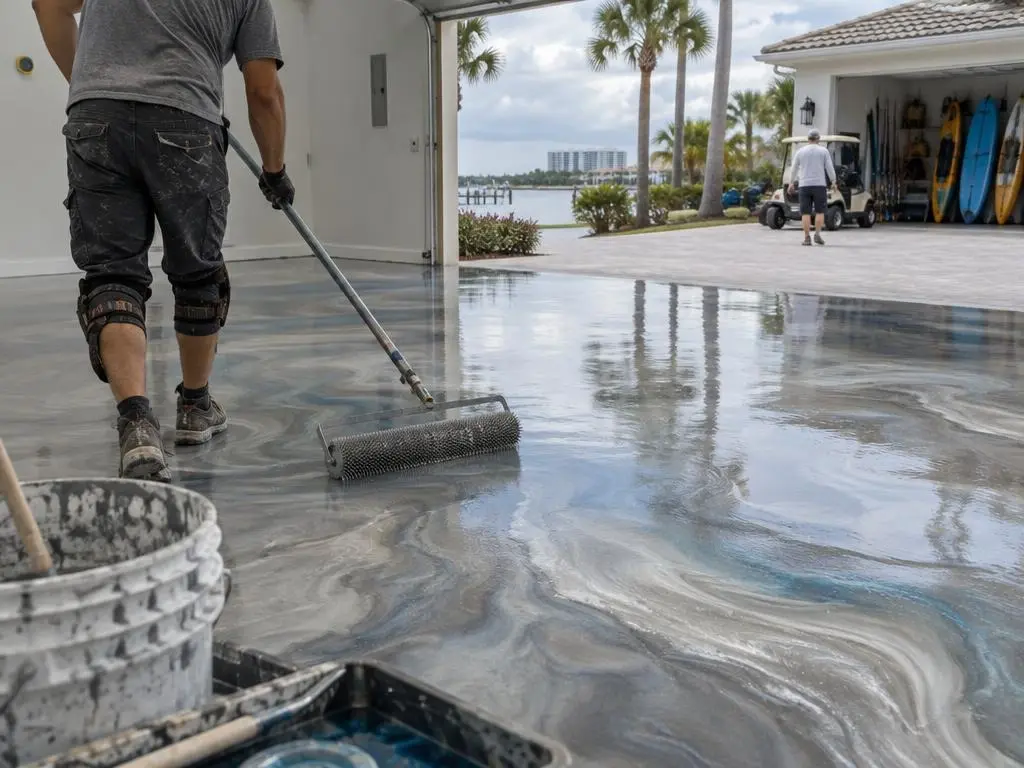
Why Choose Us for Commercial & Restaurant Floors
Built around your hours
Nights, weekends and phased sections so you lose as little business as possible.
A system matched to the abuse
We pick resin, texture and topcoat for your chemicals, heat and traffic.
Paperwork you can use
A written scope plus manufacturer data sheets, ready for inspectors, landlords or managers.
Repairs before resin
Joints and spalls are fixed first so the floor does not crack along old damage.
Commercial & Restaurant Floors Questions
Can you coat a restaurant kitchen without closing for a week?
Often, yes. Sections, overnight shifts or closed days all work, and fast-curing systems help. Bob Vila says a polyaspartic floor may keep a business closed just a day or two.
Which floor coating suits a commercial kitchen?
It depends on the heat and cleaning. Kitchens with hot water and steam cleaning often need urethane cement or a quartz-broadcast system with a chemical-resistant top. We recommend a build after seeing the space.
Do you install cove base?
Yes. We can run the coating up the wall in one seamless piece so water and grime cannot collect where wall meets floor.
Will the coating meet health code?
Ask your inspector what they require for your space. We hand over a written scope along with product data sheets so you can confirm before work starts.
Do you coat warehouse and shop floors?
Yes. We install thick epoxy systems with striping for fabrication shops, auto and marine bays, warehouses and storage spaces.
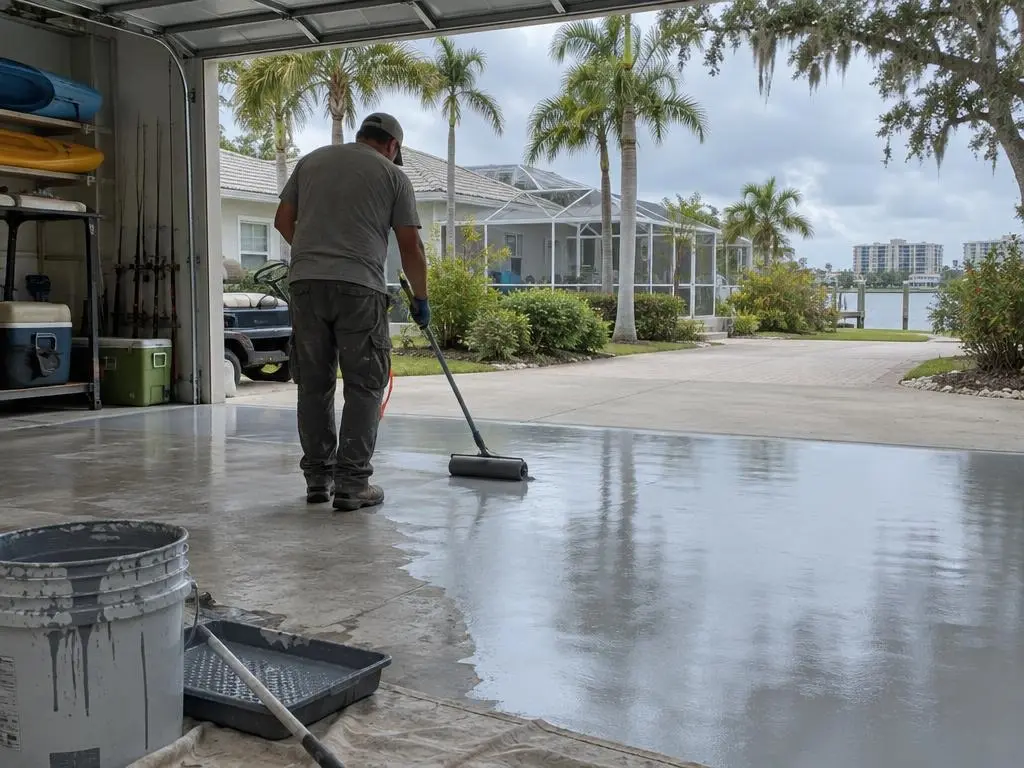
Commercial & Restaurant Floors Service Areas
- Epoxy Flooring in St. Petersburg, FL
- Epoxy Flooring in Gulfport, FL
- Epoxy Flooring in Pinellas Park, FL
- Epoxy Flooring in Seminole, FL
- Epoxy Flooring in Largo, FL
- Epoxy Flooring in Clearwater, FL
- Epoxy Flooring in Dunedin, FL
- Epoxy Flooring in Safety Harbor, FL
- Epoxy Flooring in Oldsmar, FL
- Epoxy Flooring in Palm Harbor, FL
- Epoxy Flooring in Tarpon Springs, FL
- Epoxy Flooring in Treasure Island, FL
- Epoxy Flooring in St. Pete Beach, FL
- Epoxy Flooring in Madeira Beach, FL
- Epoxy Flooring in Indian Rocks Beach, FL
- Epoxy Flooring in Belleair, FL
- Epoxy Flooring in Kenneth City, FL
- Epoxy Flooring in South Pasadena, FL
- Epoxy Flooring in Redington Shores, FL
- Epoxy Flooring in Lealman, FL
- Epoxy Flooring in Feather Sound, FL
- Epoxy Flooring in East Lake, FL
- Epoxy Flooring in Bay Pines, FL
- Epoxy Flooring in Tierra Verde, FL
Get a Commercial & Restaurant Floors Estimate
Book a free site walk for commercial and restaurant floors in St. Petersburg and Pinellas County.